
Featured Treatments (204)
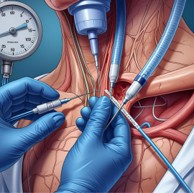
Percutaneous Needle Biopsies, FNAC And Catheter Drainages
 Multiple Hospitals Available
Biopsies and FNAC are the first step towards treatment of most disorders. With precise image guidance, it is easy to target the disease in its early stage as well as provide material for specialized pathological testing to improve patient outcomes.
FNAC involves the insertion of a fine needle into the lesion and removal of cells on a slide. These cells are then sent for testing. Needle biopsies are procedures, which are done to get a tissue sample for testing. A thick needle is inserted inside the lesion and then multiple pieces of tissues are then sent for specialized testing.
In the past, surgery was done to get the biopsy samples. These procedures were long and had more chances of complications. But with the help of CT and ultrasound guidance, the lesions that are small or deep inside the body can be accessed safely with minimal chance of complications. The procedure is done under local anaesthesia and in most cases the patient is discharged within the same day.Our experts specialize in doing biopsy from lung lesions, omentum, lymphnodes and deeper pelvic masses.
Similarly, thin or thick flexible tubes (catheters) can be inserted through the skin to drain collections inside the body to provide relief to patients and send them home faster. These catheters are flexible and cause minimal discomfort to patients.
Details not available. Contact us for more information.

Robotic Heart Bypass Surgery
Multiple Hospitals Available
Coronary artery bypass grafting refers to a surgical treatment used for patients who have one or more coronary arteries blocked. This procedure involves grafting of a new blood vessel that bypasses the clogged artery and allows sufficient blood flow to the cardiac muscles.
There have been many improvements in terms of developing various approaches of minimally invasive surgeries and robotic-assisted procedure is one such milestone. It comes with various advantages. A normal traditional open-heart surgery involves cutting the chest and dividing the breast bone. It is known as the median sternotomy approach and demands a 10 – 12 inch incision through the sternal bone. However, the robotic procedure involves much smaller incisions between the ribs. Major incisions are avoided and it doesn’t involve cutting the sternum as a result of which the traumatic impact of the surgery is reduced in large number. This leads to less pain, faster recover, lesser blood loss during the procedure and lesser complications. It also allows the surgeon to have better view of the heart as opposed to a traditional surgery.
There are two main techniques used in this surgery –
Minimally-invasive direct coronary artery bypass: This technique is also known MIDCAB, it is a sort of a grafting which includes mammary artery graft that is dissected inside the chest. Using three pencil-sized incisions and later following the suturing of the mammary artery graft to the heart vessel with a 2-inch incision made between the ribs in the left chest. This procedure can also be done without putting the patient on a heart-lung machine and is therefore also referred to as the “off pump” procedure.
Totally endoscopic coronary artery bypass: This technique is also known as TRCAB, it is a sort of a grafting which includes entire procedure being done through three ports themselves and not requiring any additional incisions.
Details not available. Contact us for more information.
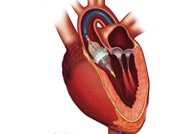
Transcatheter aortic valve replacement
Multiple Hospitals Available
Transcatheter aortic valve replacement (TAVR) also called Transcatheter Aortic Valve Implantation (TAVI) is a minimally invasive procedure that allows the surgeon to replace a damaged or narrowed aortic valve by deploying a catheter through the blood vessels.
In India, almost 13% of the population is suffering from heart problems. The more serious cases such as severe aortic stenosis (narrowing of the heart’s aortic valve) might need an open heart surgery. The open heart surgery or surgical AVR is a high-risk, complex procedure to perform, especially on patients above 70 years of age. This number of elderly patients unable to go through surgical AVR or any other viable solution goes as high as 30-40%.
As a safer option for these high-risk patients, transcatheter aortic valve replacement came into being. It is a minimally invasive procedure of replacing a damaged aortic valve. TAVI procedure has proven to be a game-changer as it brings down the risk factor to the minimum.
Details not available. Contact us for more information.
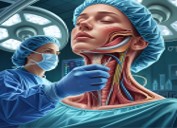
Septoplasty (Deviated Septum Surgery)
Multiple Hospitals Available
Septoplasty is a surgical procedure that is meant to correct a deviated septum. The septum is the wall of bone and cartilage that divides the nose into two separate nostrils. A deviated septum occurs when the septum moves to one side of the nose, which makes it look crooked.
A deviated septum can be congenital or may be caused due to an injury or trauma to the nose. The septoplasty surgery may be performed in adults or children and is done as outpatient basis. It is usually performed under local or general anaesthesia. The surgery can also be done to treat conditions that are blocking the nasal airway. Additionally, Septoplasty may be performed alongside rhinoplasty surgery to improve the nose appearance.
Details not available. Contact us for more information.
Intrauterine Insemination (IUI) Treatment
Multiple Hospitals Available
Embarking on the journey to parenthood through IUI can be both exciting and daunting. At Max Hospital, we prioritise your comfort and confidence at every stage of the process. Our skilled fertility team is dedicated to creating a supportive environment where you can explore treatment options tailored to your unique needs. With advanced techniques, state-of-the-art facilities, and compassionate care, we’re here to turn your dreams of parenthood into reality. Trust us to guide you every step of the way, ensuring a seamless and reassuring experience as you take this important step towards building your family.
Details not available. Contact us for more information.
Tympanoplasty Surgery
Multiple Hospitals Available
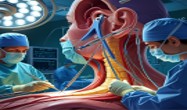
Tympanoplasty is a type of ear surgery done to patch up the hole in the eardrum. The eardrum, or tympanic membrane, is a thin tissue that divides the middle and outer ear canal. The eardrum allows you to hear as it vibrates when the sound waves enter the ear.
However, if the eardrum is damaged or has a hole in it, it may result in a ruptured eardrum. This can lead to hearing loss. The hole in the eardrum could be congenital or may be caused due to an injury or trauma. Other causes for ruptured eardrums include ear infections, pressure changes, acoustic trauma, and more.
Tympanoplasty surgery is done to reconstruct the hole in the eardrum. The surgery is usually done under general anaesthesia. A tissue graft is taken from the patient, usually behind the ear, and the surgery usually takes around two hours.
Details not available. Contact us for more information.
Hip Replacement Surgery
Multiple Hospitals Available
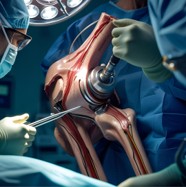
A hip replacement is a surgical procedure that includes the removal and replacement of portions of an injured hip joint either with an artificial joint or implant. It is aimed to relieve extremely severe hip pain and stiffness caused by hip arthritis and to improve function.
The implants used in this procedure are as follows:
The Stem, which is made out of metal (either titanium or cobalt-chrome), is inserted into the thighbone.
The Ball, which is usually made out of polished metal or ceramic, fits on top of the stem.
The Socket is a combination of a plastic liner and a cobalt-chrome or titanium backing.
Hip implants generally last for around 13 to 15 years. After this time period, the patient undergoes another surgery which is known as Hip revision surgery.
Details not available. Contact us for more information.
Keyhole Surgery
Multiple Hospitals Available
Keyhole surgery is a surgical procedure that allows a surgeon to access the inside of the body without making large incisions. Keyhole surgery leaves minor scars, lesser pain, and rapid recovery than conventional open surgery. It has many advantages over traditional surgery.
The surgery can be performed at different parts of the body, including lungs, veins, joints, abdomen and pelvis, head and neck, and more. Keyhole surgery can be used to diagnose conditions and can also be used as a treatment option. This type of surgery is generally used to diagnose and treat disorders related to the digestive system, female reproductive system, and urinary system.
Details not available. Contact us for more information.